



Jaw cysts and Tumour
Our Dental Services
We always take care of your smile & Self Confidence
Hot Line Number:
0120-2505505
Monday To Saturday
11: 00 AM - 2:00 PM
6:00 PM - 8:30 PM
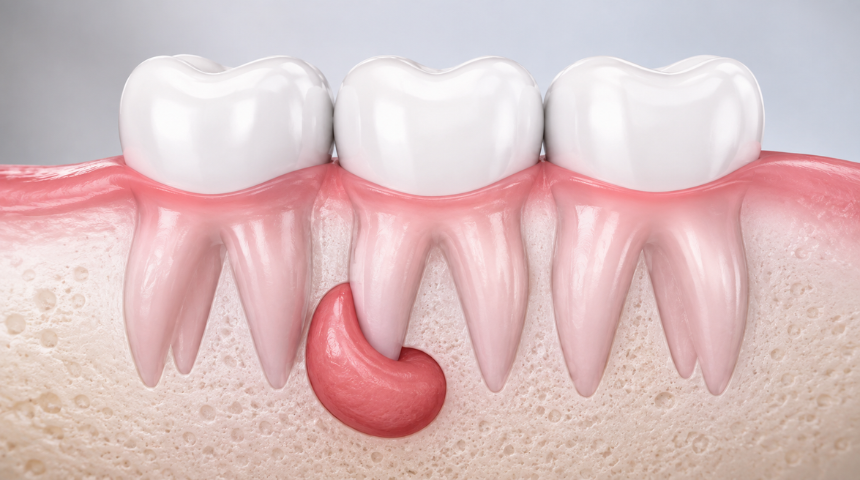
Jaw cysts and Tumour
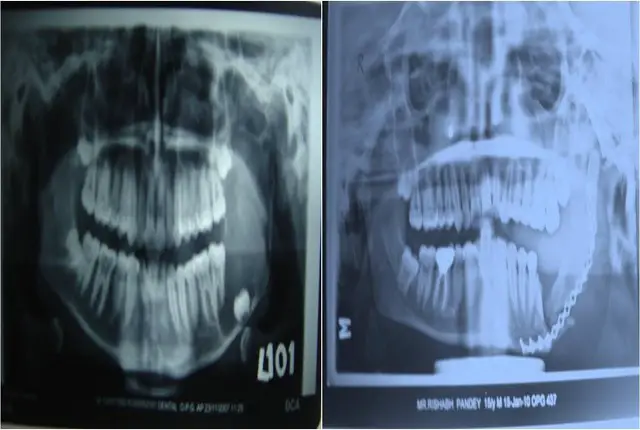
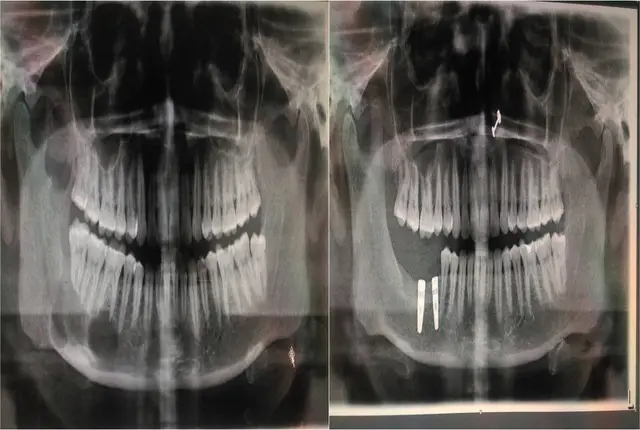
Jaw cysts and tumors represent a diverse group of lesions of the jaws and overlying soft tissues. A cyst is a lesion that contains liquid or semisolid material. A tumor is an abnormal growth or mass of tissue.
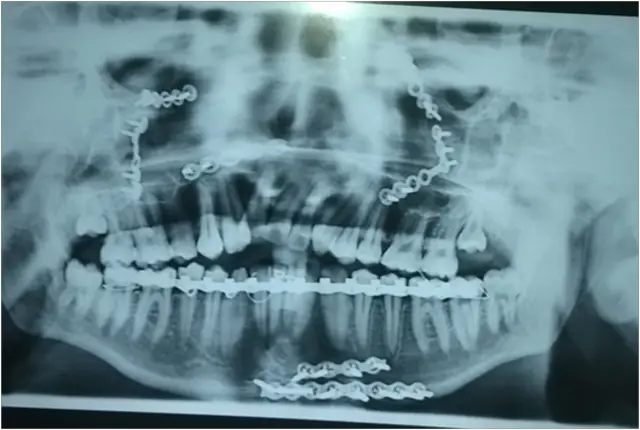
Most of the time Jaw tumors/Cysts are noticed during routine x rays of Jaw bones because they grow to a large extent inside the bone before they appear outside. Surgery is required for management/removal of Cysts and Jaws.
If untreated they may fracture the jaw or may lead to other serious complications. Common cysts are Dentigerous cyst and Keratocyst and Ameloblastoma is a common Jaw tumor.
Key Benefits of Jaw cysts and Tumour
Early Detection & Diagnosis – Helps identify jaw cysts and tumours accurately through clinical examination and appropriate imaging or diagnostic tests.
Removes Abnormal Growths – Surgical treatment can remove cysts or tumorous growths from the jaw while addressing the surrounding affected tissues when required.
Protects Jaw Structure – Timely treatment can help prevent further damage to the jawbone, teeth, and nearby structures.
Restores Oral Function – Treating the underlying condition can support normal chewing, speaking, and overall jaw function.
Personalized Surgical Care – Treatment is planned according to the type, size, location, and nature of the cyst or tumour, with appropriate follow-up care.

- Comprehensive Jaw Examination & Diagnosis
- Advanced Imaging & Treatment Planning
- Surgical Removal of Cysts & Tumours
- Preservation of Healthy Jaw & Dental Structures
- Personalized Post-Treatment Follow-Up Care
FAQs - Jaw cysts and Tumour
1. What are jaw cysts and tumours?
Jaw cysts are abnormal, fluid-filled or tissue-lined spaces that can develop within the jawbone. Jaw tumours are abnormal tissue growths that may be benign or, less commonly, malignant.
2. What are the common symptoms of jaw cysts or tumours?
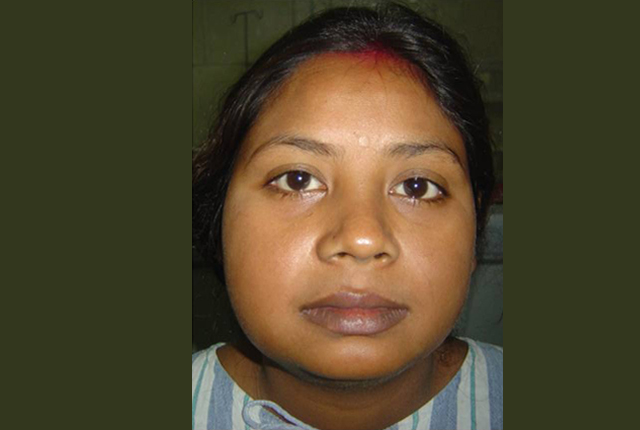
Some may not cause symptoms and are discovered during routine dental X-rays. Others may cause jaw swelling, pain, tooth movement, facial asymmetry, numbness, or difficulty chewing.
3. How are jaw cysts and tumours diagnosed?
Diagnosis typically involves a clinical examination and imaging such as dental X-rays, CT scans, or MRI when required. A biopsy may also be needed to determine the exact nature of a growth.
4. Do all jaw cysts and tumours require surgery?
Not necessarily. Treatment depends on the type, size, location, and behaviour of the lesion. Some may require monitoring, while others may need surgical removal or additional treatment.
5. Why is early treatment important?
Early evaluation can help identify the nature of the lesion and prevent potential complications such as damage to teeth, surrounding bone, nerves, or other nearby structures.